What Is an EICR and How Often Do You Need One?
An Electrical Installation Condition Report (EICR) is the only way to know if your electrics are safe. Here is everything you need to know about them.

Your home's electrics are invisible most of the time. Cables run behind plasterwork, connections sit inside consumer units, and circuits carry current through walls you never think about. That invisibility is exactly why an Electrical Installation Condition Report — an EICR — matters so much.
An EICR is a thorough inspection of your entire electrical installation carried out by a qualified electrician. It tells you whether your electrics are safe, what needs attention, and how urgently. Think of it like an MOT for your wiring.
What Does an EICR Actually Involve?
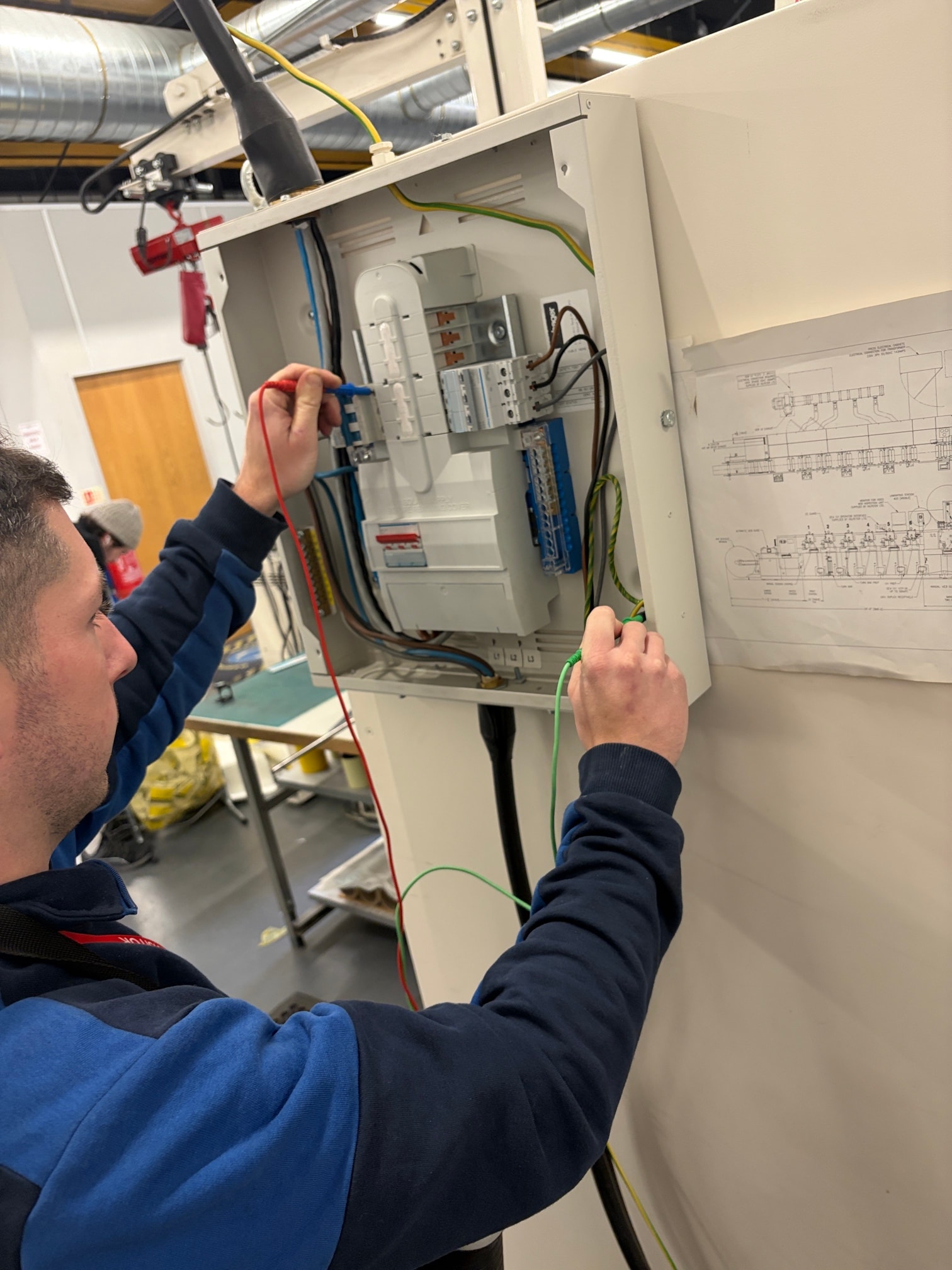
During an EICR, a registered electrician will inspect and test every part of your fixed electrical installation. That includes:
- The consumer unit (fuse board) and its protective devices
- All wiring throughout the property
- Sockets, switches, and light fittings
- Earthing and bonding arrangements
- Any fixed electrical equipment such as showers, cookers, and immersion heaters
The inspection is visual and physical. Your electrician will check for signs of damage, deterioration, overheating, or incorrect installation. They will also carry out a series of electrical tests to verify that circuits are working safely and that protective devices will operate correctly in a fault situation.
A full EICR on a typical three-bedroom house usually takes between three and four hours. Larger properties or older installations with more complex wiring will take longer.
Understanding the Condition Codes
Once the inspection is complete, your electrician will issue a report. Every observation is assigned one of four condition codes:
C1 — Danger Present Immediate risk of injury or death. A C1 observation means the installation poses a direct danger and must be remedied before the property is used. Examples include exposed live conductors, missing earth connections on metal pipework, or a consumer unit with no protection against electric shock.
C2 — Potentially Dangerous Not immediately dangerous, but could become so. C2 observations must be addressed urgently — typically within 28 days. Common examples include outdated wiring that lacks adequate insulation, circuits without RCD protection, or overloaded consumer units.
C3 — Improvement Recommended Not dangerous, but not up to current standards. C3 observations do not prevent the EICR from passing, but your electrician will recommend improvements. These might include adding additional socket outlets to reduce the use of extension leads, or upgrading older wiring to modern standards.
FI — Further Investigation Required Something has been identified that needs more investigation before a conclusion can be reached. This might occur where wiring is concealed and cannot be fully inspected without opening walls.
An EICR is issued as either Satisfactory or Unsatisfactory. Any C1 or C2 observation results in an Unsatisfactory report. A Satisfactory report means your installation is safe to use, though C3 recommendations may still be noted.
How Often Do You Need an EICR?
The answer depends on who you are and how the property is used.
Homeowners
There is no legal requirement for homeowners to have an EICR, but the recommended interval is every ten years. If you are buying a property, it is strongly advisable to have one carried out before you complete — electrical faults are not always visible during a standard survey, and remedial work can be expensive.
You should also consider an EICR if:
- You are moving into a property where you do not know the history of the electrics
- You are planning a major renovation or extension
- You have noticed flickering lights, tripping circuits, or burning smells
- Your property is more than 25 years old and has never been inspected
Private Landlords
Since 1 June 2020, private landlords in England have been legally required to have a valid EICR in place for all tenancies. The rules are:
- An EICR must be carried out at least every five years
- A copy must be provided to existing tenants within 28 days of the inspection
- New tenants must receive a copy before they move in
- Prospective tenants must receive a copy within 28 days of requesting one
- Local authorities can request a copy and issue remedial notices if the report is Unsatisfactory
In Scotland, similar requirements apply under the Housing (Scotland) Act 2006. Landlords must ensure electrical installations are in a reasonable state of repair and in proper working order throughout the tenancy.
Failure to comply can result in fines of up to £30,000 in England.
Commercial Properties
For commercial premises, the recommended interval is every five years, or more frequently for high-risk environments such as industrial units, swimming pools, or properties with heavy electrical loads. Many commercial leases also require landlords to maintain valid EICRs.
New Builds
A new build property will have an Electrical Installation Certificate (EIC) rather than an EICR. This confirms the installation was built to current standards. The first EICR is typically recommended ten years after the EIC was issued.
What Happens If Your EICR Is Unsatisfactory?
An Unsatisfactory report is not a reason to panic — it is a reason to act. Your electrician will explain exactly what needs to be done and in what order of priority.
C1 observations need to be fixed immediately. C2 observations should be addressed within 28 days. Once the remedial work is complete, your electrician will issue a Minor Electrical Installation Works Certificate or an updated EICR confirming the installation is now Satisfactory.
For landlords, the law requires that remedial work identified in an Unsatisfactory EICR is completed within 28 days (or sooner if specified in the report). Written confirmation of the completed work must then be provided to tenants and, if requested, to the local authority.
Why Choose a NAPIT or SELECT Registered Electrician?
An EICR is only as reliable as the person carrying it out. Using a registered electrician gives you confidence that:
- They are qualified to the current edition of BS 7671 (the IET Wiring Regulations)
- Their work is independently assessed and audited
- They carry adequate insurance
- The report they issue is legally valid for landlord compliance purposes
Test My Electrics is registered with both NAPIT and SELECT — Scotland's leading electrical trade body. Every EICR we carry out is thorough, clearly explained, and backed by our workmanship guarantee.
Book Your EICR Today
Whether you are a homeowner wanting peace of mind, a landlord keeping on top of compliance, or a business owner with a legal duty of care, an EICR is the single most important thing you can do for your electrical safety.
We cover Ayrshire, Glasgow, and the wider West of Scotland. Get in touch today to book your inspection or to ask any questions about what an EICR involves.
Explore Topics
Written by
Neil Claxton
Content creator and writer sharing insights and stories.