What Is a Consumer Unit and When Does It Need Replacing?
Your consumer unit is the heart of your home's electrical system. Here is how to tell if yours is out of date, unsafe, or due for an upgrade — and what a replacement involves.

Most homeowners know roughly where their fuse box is. Fewer know what it actually does — or that the one in their home might be putting them at risk.
This guide explains what a consumer unit is, how to tell if yours needs replacing, and what a modern upgrade looks like.
What Is a Consumer Unit?
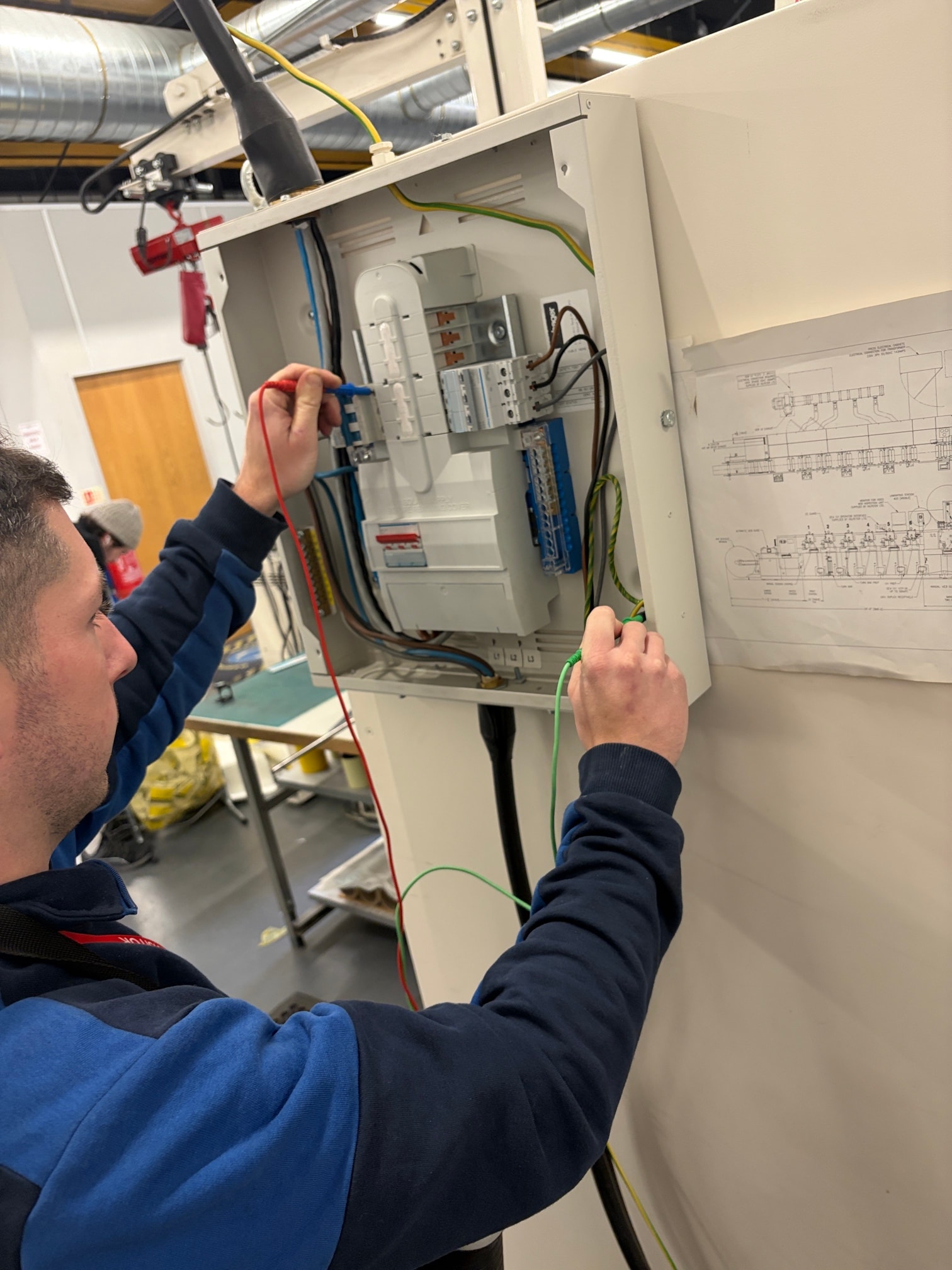
A consumer unit — commonly called a fuse box — is the central hub of your home's electrical system. It receives electricity from the grid via your meter and distributes it to individual circuits throughout the house: lighting, sockets, cooker, shower, and so on.
Each circuit is protected by either a fuse or a circuit breaker. If a fault occurs — a short circuit, an overload, or a wiring problem — the protection device trips or blows, cutting power to that circuit before the fault can cause a fire or electrocution.
Modern consumer units go further than this. They include Residual Current Devices (RCDs), which detect tiny imbalances in current that could indicate electricity is flowing through a person. An RCD reacts in milliseconds — fast enough to prevent a fatal shock.
Types of Consumer Unit
Old rewirable fuse boards. Found in homes built before the 1970s. These use wire fuses that burn through when overloaded. They offer no RCD protection and are considered unsafe by modern standards.
MCB-only consumer units. Common from the 1980s to early 2000s. These use miniature circuit breakers (MCBs) instead of fuses, which is an improvement — but they still lack RCD protection on most circuits.
Split-load consumer units. The standard from around 2000 onwards. These include at least one RCD protecting a group of circuits, with some circuits left unprotected for essential supplies.
High-integrity (dual RCD) consumer units. The current best practice. Every circuit is protected by an RCD, and the unit is split so that a tripped RCD only affects half the circuits — you never lose all power at once.
RCBO consumer units. Each circuit has its own combined MCB and RCD (an RCBO). The most resilient option — a fault on one circuit affects only that circuit.
Signs Your Consumer Unit Needs Replacing
It Has Old-Style Rewirable Fuses
If you open your fuse box and see ceramic fuse holders with wire running through them, your board is decades out of date. It offers no RCD protection and should be replaced as a priority.
It Has No RCD Protection
Check your consumer unit for a device labelled "RCD" or a switch with a test button. If there is none, your home lacks the protection required by current wiring regulations (BS 7671). This is a significant safety gap.
It Trips Frequently
Occasional tripping is normal. Frequent tripping — especially if it happens without an obvious cause — suggests the unit is struggling with the electrical load in your home, or that there is an underlying fault that needs investigating.
It Is Visibly Damaged
Scorch marks, melted plastic, a burning smell, or a buzzing sound from your consumer unit are all serious warning signs. Do not ignore them. Switch off the main switch and call a qualified electrician immediately.
Your Home Has Had Significant Electrical Work
If you have added circuits, installed an EV charger, or extended your home since the consumer unit was fitted, it may no longer be rated for the load it is carrying.
You Are Buying, Selling, or Renting
An EICR (Electrical Installation Condition Report) is required for rental properties in Scotland and is increasingly expected by buyers and mortgage lenders. An outdated consumer unit is one of the most common reasons an EICR returns a C2 (potentially dangerous) or C1 (danger present) code.
What Does a Consumer Unit Replacement Involve?
A consumer unit replacement is a straightforward job for a qualified electrician, typically completed in a day.
The process:
- The electrician isolates the supply and removes the old unit
- All existing circuits are tested before reconnection
- The new unit is fitted and circuits are reconnected with correct labelling
- The installation is tested to BS 7671 standards
- An Electrical Installation Certificate (EIC) is issued
The EIC is your proof that the work has been carried out to the required standard. Keep it safe — you will need it if you sell the property.
How Much Does It Cost?
A standard consumer unit replacement in Ayrshire typically costs between £400 and £700, including materials and certification. If additional work is needed — new circuits, remedial wiring, or an upgrade to the incoming supply — costs will be higher.
At Test My Electrics, we provide free, fixed-price quotes with no hidden extras.
Can I Replace a Consumer Unit Myself?
No. Consumer unit replacement is notifiable electrical work under Part P of the Building Regulations. It must be carried out by a registered electrician who can self-certify the work. Doing it yourself — or using an unregistered contractor — means the work cannot be legally certified, which will cause problems when you come to sell or remortgage.
Summary
Your consumer unit is one of the most important safety devices in your home. If it is more than 20 years old, lacks RCD protection, or has been flagged on an EICR, it is time to consider an upgrade.
A modern consumer unit fitted by a NAPIT-registered electrician gives you the protection your home needs — and the certification to prove it.
To arrange a free quote for a consumer unit replacement in Ayrshire, call Test My Electrics on 01292 432525.
Explore Topics
Written by
Neil Claxton
Content creator and writer sharing insights and stories.